Is Your Basement Waterproofing Ruining Your Radon System?
As radon mitigation professionals in the Ohio Valley, we encounter all kinds of homes that present unique challenges for radon mitigation. One of the most common is the basement waterproofing systems. These systems are designed for basements that have continuous flooding problems even with an operational sump pump. They are installed by drilling out all of the concrete slab around the perimeter of the basement and installing corrugated pipes and gravel that all funnel back to the sump pump.
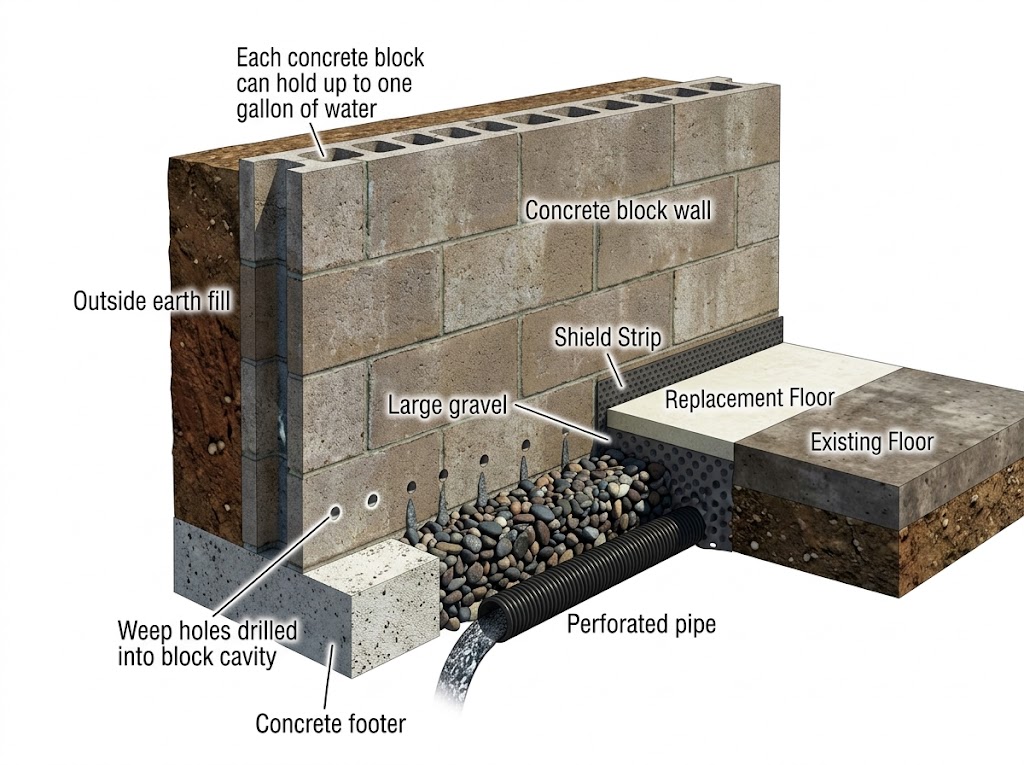
It is a simple, effective way to keep water out of the basement. However, if your home has high radon levels or an existing system, it creates two major challenges:
1) loss of suction
2) difficulty establishing the pressure field
Waterproofing systems are very porous and need to be in order for water to flow freely, for a radon system, this can be problematic. The most common problem we see is high-
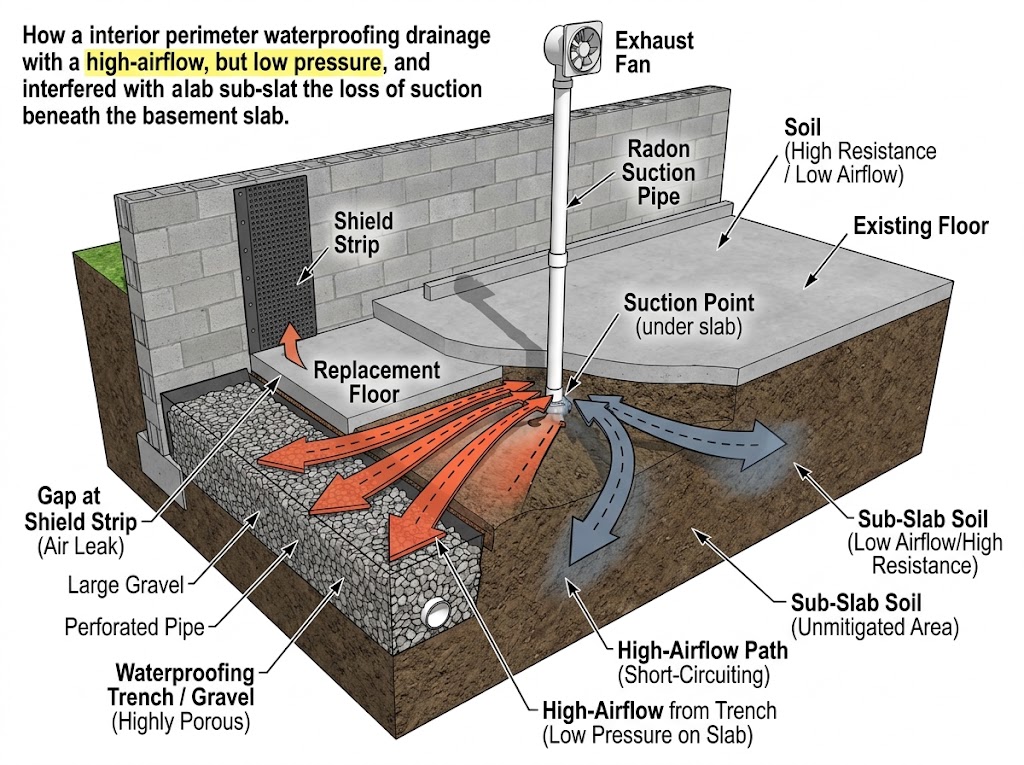
airflow, but low pressure. This is when the radon system is pulling large amounts of air, but only from the new waterproofing system, and not from the entire basement slab. By changing the airflow beneath the slab and creating new pathways for air to move, these systems can interfere with the negative pressure needed to effectively reduce radon levels.
For existing systems:
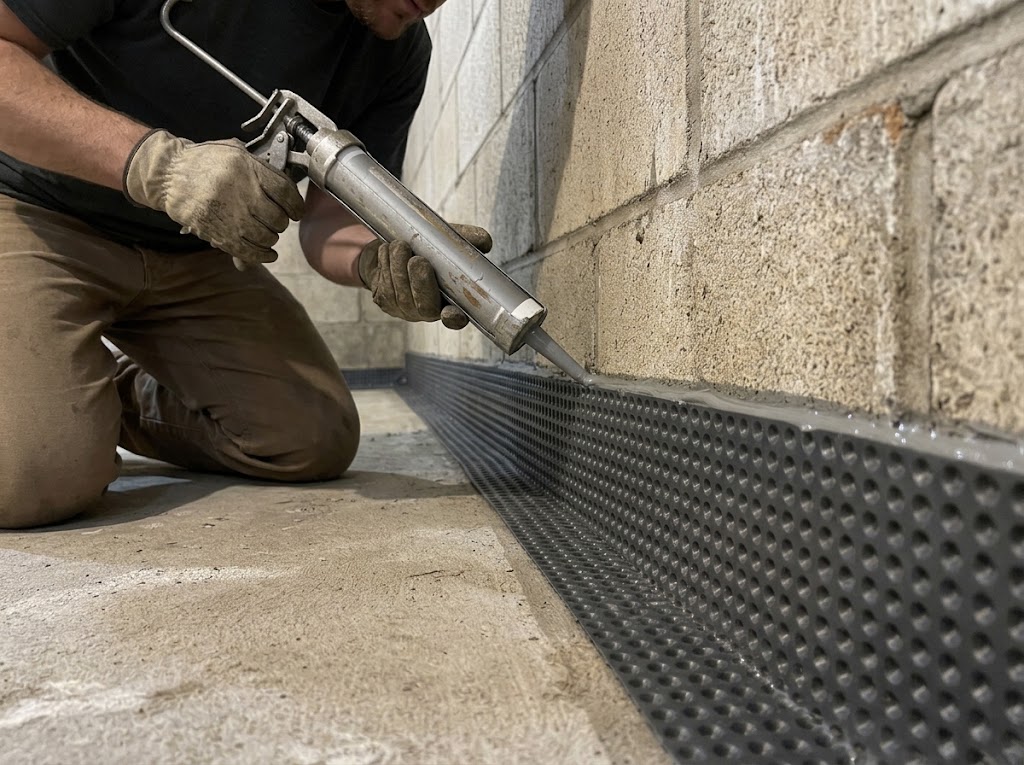
The radon system relies heavily on negative pressure beneath the slab, when concrete is removed, that pressure escapes. And even with a replacement slab, there is a new shield strip installed along the perimeter that leaves a gap between that slab and the foundation wall. We recommend putting a bead of caulk all the way around the internal perimeter of your slab above the shield strip. This retains the waterproofing system’s effectiveness, while also ensuring you don't lose suction under the slab. If you have an existing radon system, it's very important to re-test your home.
When installing new systems:
The most important aspect of a new radon system in these circumstances is the placement of the suction point. It’s essential to place the suction point as close to the center of the slab as possible. This way the pressure field can easily extend to all sides of the slab without losing any suction along the perimeter. This also establishes a pressure field, and allows for high amounts of pressure to be generated.
Waterproofing systems are very porous and need to be in order for water to flow freely, for a radon system, this can be problematic. The most common problem we see is high-airflow, but low pressure. This is when the radon system is pulling large amounts of air, but only from the new waterproofing system, and not from the entire basement slab.
Whether you already have a radon mitigation system or are planning to install one, it's important to account for:
The presence of an interior drainage system
Proper sealing along the perimeter
Careful placement of the suction point
Verification of the pressure field
These can all play an important role in achieving effective radon reduction.
At GuardianPro Environmental, we believe keeping your basement dry and your home's radon levels low should go hand in hand. If you recently installed a basement waterproofing system, or are planning to have one installed, we recommend testing your radon levels and getting your existing mitigation system evaluated. A system that worked perfectly before waterproofing may need adjustments to continue working effectively. With the right approach, you can protect your home from both water intrusion and the dangers of elevated radon levels.
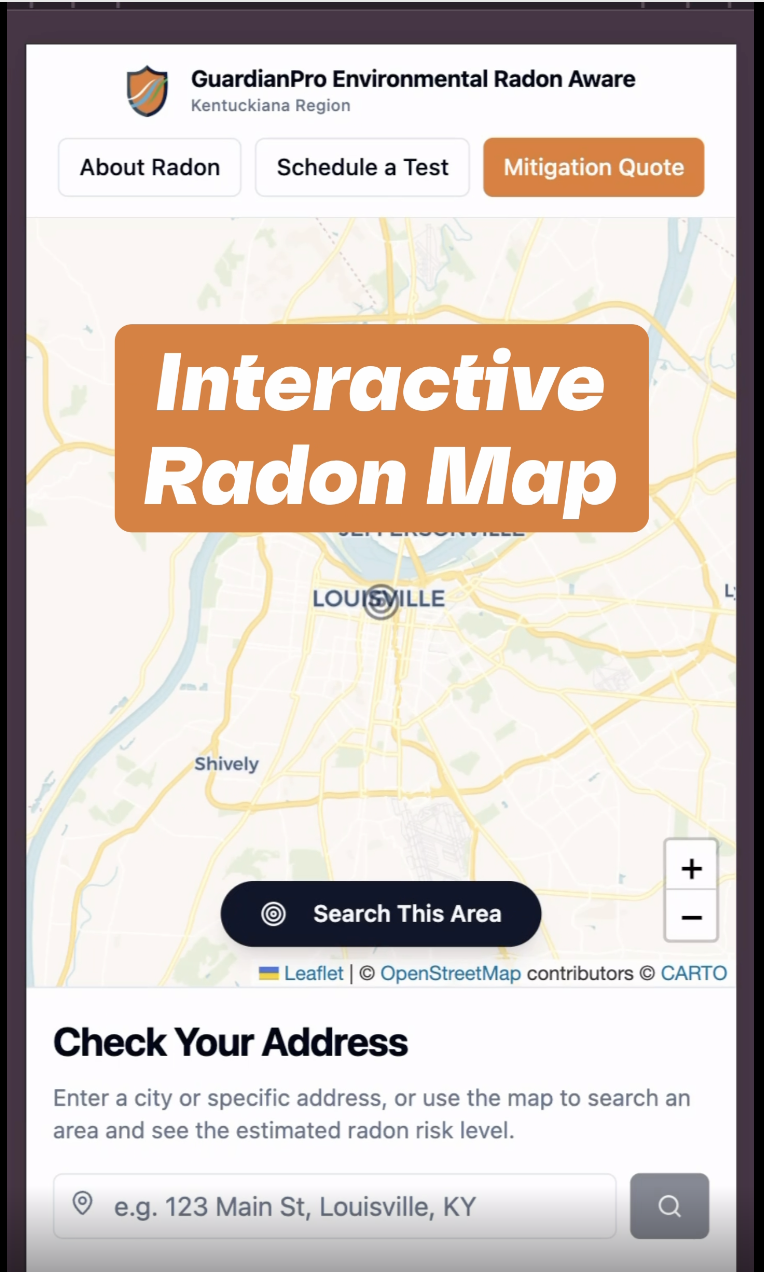
See the approximate Radon Levels in your area!
Visit our Interactive Radon Map and look for your home.
Based on EPA, KGS, and our own testing data, just move the map with your fingers (or mouse) and click "Search This Area" to see the approximate radon levels.
Radon testing should be performed every 2 years to ensure you and your family are safe.
Review Spotlight:
⭐⭐⭐⭐⭐
10/01/2026 - Latonia Eisenberg
"Guardian inspections are excellent to work with. I appreciate the professionalism and they're quick execution on all their reports in a timely manner."
Author:
David A.
Environmental Manager
GuardianPro Environmental